
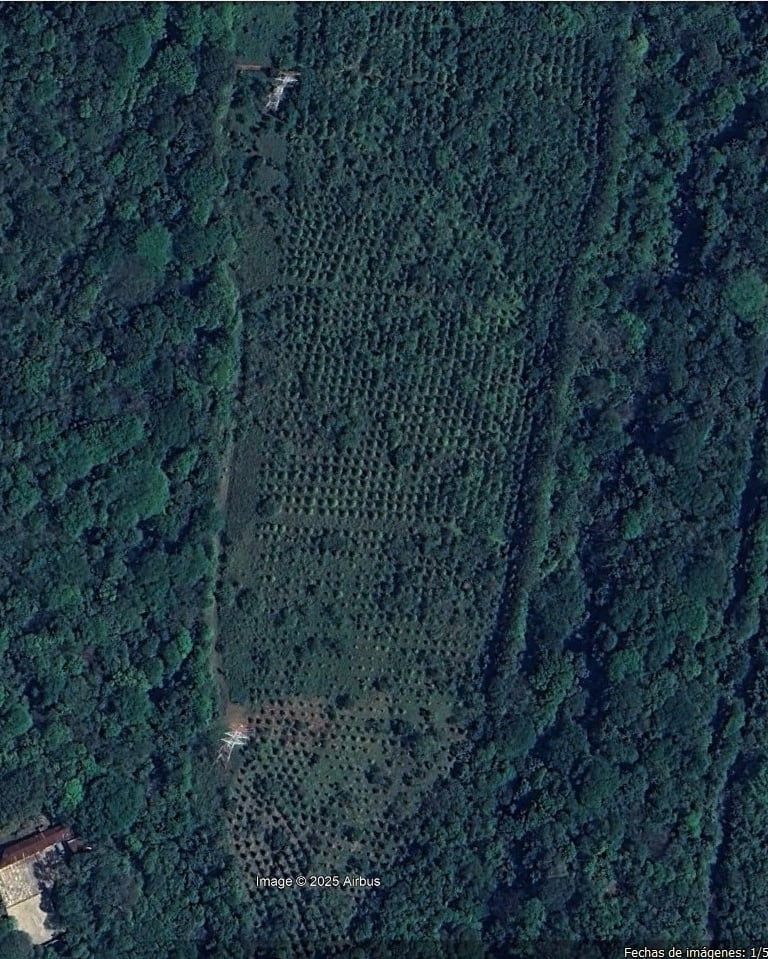
Reforestation (2018 - 2025)
Since 2018, Emerald Palm cultivation has been integrated into our reforestation program, helping restore native tree cover, protect watersheds, and create natural corridors for wildlife. Each year, new milestones are achieved — from planting Emerald Palm alongside native species to monitoring ecosystem recovery. By 2025, our goal is to establish a self-sustaining landscape where Emerald Palm contributes to both environmental preservation and community well-being.
A Path of Transformation
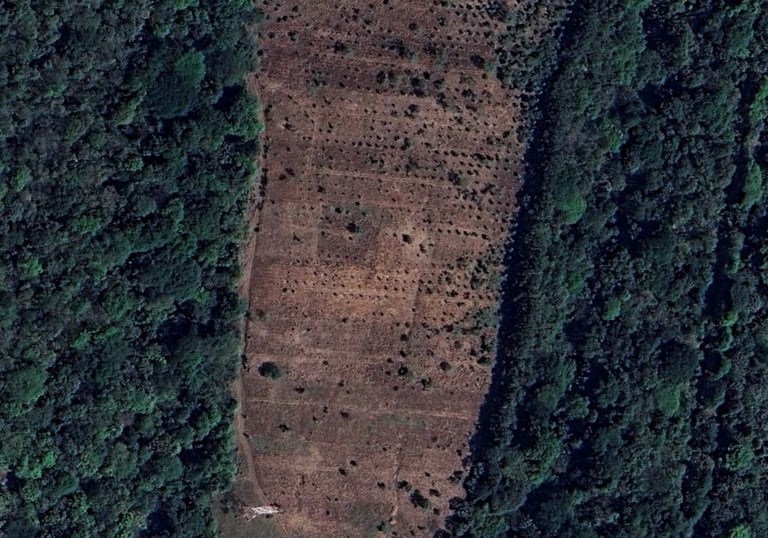
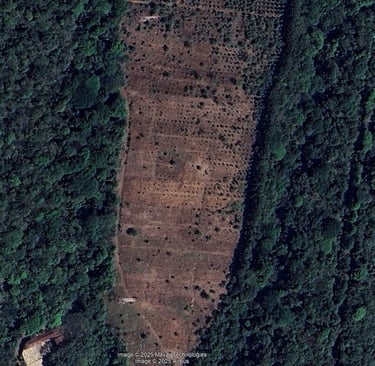
This path tells its own story. On one side, land once cleared for cultivation; on the other, a forest slowly reclaiming its place. Since 2018, Emerald Palm has worked to restore this transition zone — turning cropland back into habitat, one section at a time.
Two Paths, One Landscape
Side by side, two approaches to the same land. While neighboring properties continue to be cleared for cultivation, Emerald Palm's forest remains protected — conserved, restored, and continuously improved.
Neighboring Land
Emerald Palm Forest


Cleared for crops and grazing, much of the surrounding land has lost its original forest cover.
Dense, thriving, and carefully maintained — a living example of what conservation makes possible.


A Forest Under Pressure
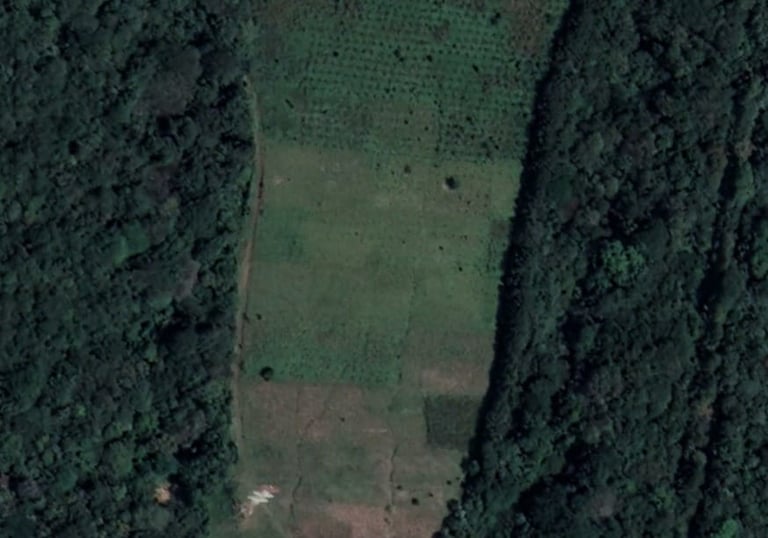
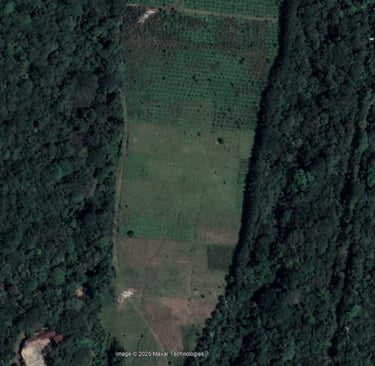
Reforestation is not a one-time achievement — it's an ongoing commitment. Between 2025 and 2026 alone, satellite imagery shows new clearings appearing on land surrounding our forest, as neighboring areas continue to be converted for cultivation. It's a reminder that the pressures facing this ecosystem are constant — and why Emerald Palm's work to protect and expand this habitat must continue, year after year.
Forest cover before new clearings
New clearings appear within a single year


Witnessed First-Hand
This is not just a message — it's something we've seen directly. Recently, a masacuata (boa constrictor) was found fleeing land cleared by deforestation, seeking refuge within Emerald Palm's forest. It's a small but powerful reminder of what's at stake when habitat disappears — and why every acre we protect matters.
Biodiversity around Emerald Palm
Several species of flora and fauna have returned and found safe habitat in our restored forests. Chief among them is the yellow-naped parrot, a critically endangered species that now nests and thrives within our protected forest — a direct result of years of sustained conservation.
Other species have followed. The toucan, once absent from the area due to environmental pressure and habitat loss, has also been sighted again in recent years — another encouraging sign that restoration efforts are helping bring balance back to this ecosystem.
Flora
Beyond Emerald Palm itself, our plantations coexist with orchids, ferns, and other native plants
that enrich the landscape. These species provide food and shelter for pollinators and wildlife,
while adding beauty and diversity to the ecosystem. Explore the flora that flourishes in harmony with Emerald Palm.
Fauna
Our Emerald Palm landscapes are home to a wide variety of native birds, mammals, reptiles, and other wildlife.
Each species plays a vital role in maintaining ecological balance and demonstrates how sustainable cultivation
can coexist with natural ecosystems. Discover the emblematic animals that thrive alongside Emerald Palm.